Why luxury medical spa biometric reports matter after you fly home
Your stay at a luxury medical spa hotel should end with more than glowing skin and a lighter body. The real upgrade is the dense medical spa biometric report that arrives days later, packed with medical data, dashboard-style graphics and clinical commentary. Handled well, that report can quietly reshape your wellness trajectory for the next ninety days and beyond.
Across the global medical spa landscape, high end medspa properties now treat the report as a signature amenity, not an afterthought. In North America, the Middle East and Asia Pacific, leading med spas position this document as your personalised overview of risk, resilience and recovery capacity, built from blood tests, body composition scans and sleep tracking. The best medical spas use HIPAA compliant technology and segmentation logic to filter noise, highlight signal and frame clear next steps you can actually follow at home.
Think of it as a private briefing on your own physiology, rather than a generic wellness brochure. Where a traditional spa might focus on scented treatments, a serious medical spa uses global medical standards to benchmark your blood pressure, LDL cholesterol, glucose and inflammatory markers. One expert explanation often included is simple and direct: “What is a biometric report? Snapshot of health metrics like labs and vitals, interpreted against reference ranges from organisations such as the American Heart Association or similar national bodies.”
Decoding the sections: from bloodwork to body composition and skin
Most guests open their medical spa biometric report and meet a wall of numbers, charts and unfamiliar acronyms. Start with the bloodwork section, which usually summarises cardiovascular risk, metabolic health and systemic inflammation in a concise analysis. For a healthy adult, the key signal metrics are fasting glucose, LDL cholesterol, blood pressure and sometimes high sensitivity C reactive protein, while minor fluctuations in less critical markers are often statistical noise.
Expect your med spa or medspa clinic to flag whether your blood pressure sits near the widely accepted normal systolic value of around 120 millimetres of mercury, as referenced in major hypertension guidelines. The report may compare your cholesterol profile to desirable ranges, such as an LDL cholesterol level close to 100 milligrams per decilitre, and then link these medical findings to lifestyle guidance rather than aggressive treatments. In premium spas across Asia, South America and North America, this bloodwork section is increasingly based on continuous data from wearables, not just a single fasting draw, which gives a richer time-series view of your physiology over several days.
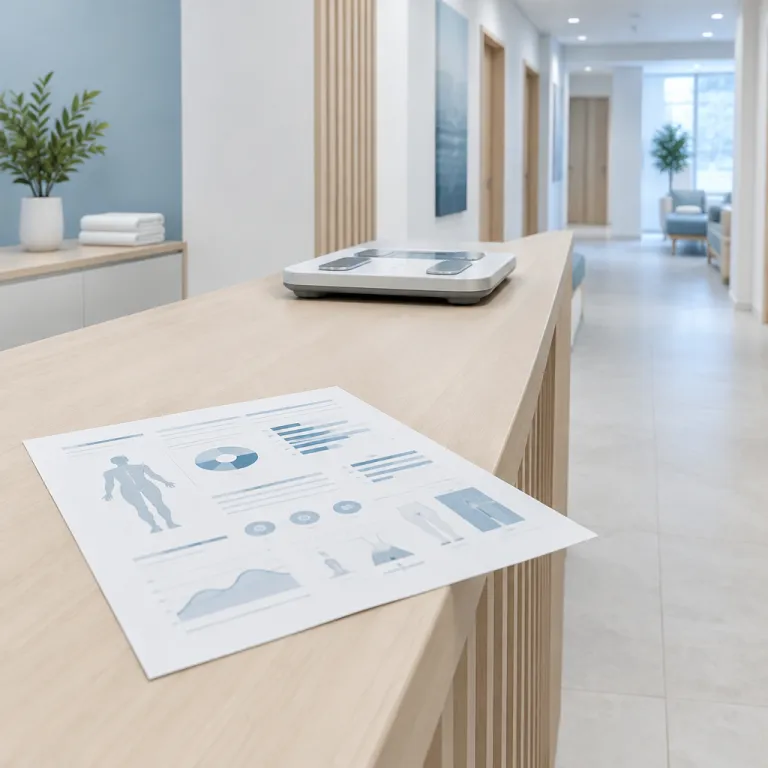
The body composition and skin analysis pages translate directly into the spa side of your stay. Here, simple bar charts or colour-coded diagrams might show body fat percentage, visceral fat, skeletal muscle mass and segmental distribution across arms, legs and trunk. Skin rejuvenation and hair removal programmes are often mapped against these findings, and some properties now integrate DNA led planning, as explored in this guide to a genetic testing driven medical spa programme, to refine which skin treatments or body shaping protocols make sense for your specific risk profile.
Signal versus noise: which numbers actually matter for travelers
When you read your medical spa biometric report at home, the first task is to separate clinically meaningful signal from background noise. For most healthy adults, the core signal cluster includes blood pressure, fasting glucose, LDL cholesterol, waist circumference, body fat percentage and basic liver and kidney markers. Secondary metrics such as minor vitamin deviations or slightly off reference ranges often matter less, unless your medical history or med spa physician highlights them.
Luxury medical spas with a strong global medical orientation now borrow tools from the data visualisation and spa market analysis world to present these priorities clearly. They use colour coding, simple pie charts and traffic light systems to show which areas of your body need immediate attention and which can wait for the next review period. Some North America and Asia Pacific properties even provide a short executive-summary style page that ranks your top three risks and top three strengths, which is far easier to act on than twenty pages of raw data.
Sleep, heart rate variability and recovery scores deserve special attention if your stay included wearable based monitoring. These metrics, often tracked across several nights, reveal how your nervous system responds to stress, travel and spa treatments, and they can guide when to schedule demanding work or intense training after your trip. For facial aesthetics, a separate report section may link skin rejuvenation markers, such as pigmentation and elasticity scores, to specific protocols, and you can see how this connects with planning a luxury medical spa stay that includes a facial after injectables.
Turning findings into a 90 day home protocol
The most valuable moment in the life of a medical spa biometric report is not the day you receive it, but the ninety days that follow. Treat the document as a structured briefing on your health, then translate each major section into one or two concrete actions. If your body composition analysis shows elevated visceral fat, for example, your first ninety day goal might be a modest reduction in waist circumference combined with two strength sessions per week, in line with physical activity recommendations from bodies such as the World Health Organization.
Start by listing three domains: metabolic health, body composition and skin or aesthetic priorities. Under metabolic health, use the data to set specific targets, such as maintaining fasting glucose within a narrow range or keeping blood pressure close to your personal baseline, rather than chasing abstract wellness ideals. For body shaping and performance, VO2 estimates, resting heart rate and recovery indices can guide how often you train, how hard you push and when you schedule lighter days, turning the med spa experience into a personalised training block rather than a one off indulgence.
On the aesthetic side, align skin rejuvenation and hair removal plans with what the report actually shows, not with generic spa menus. If pigmentation and texture score poorly, prioritise evidence based treatments like medical grade peels, laser resurfacing or prescription topicals, and let less targeted options wait. This is also the moment to revisit facial protocols that soften frown or eleven lines, and you can cross reference your report with this detailed guide to how luxury medical spa hotels structure clinical facial programmes to keep your at home routine aligned with what worked during your stay.
Looping in your own physician and planning follow up stays
A sophisticated medical spa biometric report should never replace your primary care physician, and the best properties design their documentation to integrate seamlessly with your existing medical équipe. When you receive the digital file through a secure portal, share it with your doctor before your next appointment and highlight the sections that concern you most. This avoids duplicated tests, respects HIPAA style privacy standards and lets your physician focus on interpretation rather than reordering the same labs.
Many North America and Europe based medical spas now structure their reports with clear headings, which makes it easier for clinicians to scan cardiovascular, metabolic, hormonal and dermatological sections quickly. Some even include a brief summary paragraph for each domain, outlining what is normal, what is borderline and what requires further analysis or imaging, often referencing national or international guideline ranges. If a value is clearly abnormal, the standard guidance remains simple: “What if a value is abnormal? Discuss with provider, plan lifestyle or possible treatment”.
Think of your future spa travel as part of a long term forecast rather than a series of isolated holidays. A realistic follow up cadence might involve a comprehensive biometric screen every twelve to eighteen months, with lighter check ins or remote coaching in between, especially if your med spa offers remote viewing via apps. Over time, this creates your own longitudinal dataset, where you and your clinicians can track how body composition, skin quality and recovery capacity evolve, and you can allocate travel budget, time and even tax planning around the med spas and regions, from Asia Pacific to the Middle East and South America, that deliver the clearest measurable results.
How the global medical spa market shapes your biometric experience
Behind every polished medical spa biometric report sits a fast evolving global market that now spans North America, Europe, Asia Pacific, the Middle East and South America. Analysts talk about market size in terms of USD billion and forecast billion growth curves, but for you as a traveler, the relevant question is how that competition improves the quality of your data and treatments. As med spas compete for market share, they invest heavily in technology, clinical staff and integrated wellness programmes that turn a simple spa stay into a structured health intervention.
In practice, this means more precise body scanners, higher resolution skin imaging and better integration between wearable devices, laboratory systems and electronic health records. Leading medical spas use this technology to generate cleaner datasets, sharper analysis and clearer segmentation of risk, which then feed into the report you receive at home. Some properties in Asia and the Middle East now partner with academic centres or teaching hospitals to validate their protocols, while established North America clinics refine their offer based on long term outcomes rather than short term satisfaction scores.
For travelers, the implication is straightforward: choose medical spa hotels that treat the biometric report as a core product, not a marketing extra. Look for clear explanations of methods, from blood tests and vital signs to body measurements, and ask how often they audit their data quality and update their protocols. A property that can speak fluently about its own internal outcomes report, its position within the wider spa market and its plans for future forecast periods is far more likely to deliver a report you will actually use, long after you have checked out.
FAQ
What is a biometric report from a medical spa ?
A biometric report from a medical spa is a structured summary of your health metrics collected during your stay, including blood tests, vital signs and body composition. It often includes sections on cardiovascular risk, metabolic status, body fat distribution and sometimes skin imaging. The goal is to give you a clear, clinically grounded snapshot you can act on once you return home, ideally aligned with guideline ranges from recognised medical organisations.
How long after my stay will I receive the report ?
Most luxury medical spas deliver the biometric report within three to ten business days after your assessments are complete. The timing depends on how quickly partner laboratories process bloodwork and how complex the analysis is. Many properties now use secure digital portals or apps so you can access the report remotely as soon as it is validated.
What should I do if one of my values is abnormal ?
If a value in your medical spa biometric report falls outside the normal range, you should share the document with your primary care physician or relevant specialist. They can confirm whether the abnormality is clinically significant and whether you need further testing, lifestyle changes or medical treatment. Medical spa staff can explain the findings, but ongoing management belongs with your usual healthcare team.
How can I turn the report into an actionable plan ?
Start by identifying three priority areas, such as metabolic health, body composition and skin or aesthetic concerns. For each area, translate the findings into one or two specific behaviours, like adjusting training volume, modifying nutrition or scheduling targeted dermatology treatments. Set a ninety day window to test these changes, then plan a follow up with your physician or a repeat med spa assessment to measure progress and refine the protocol.
Do I need to repeat biometric testing at every medical spa stay ?
You do not need a full biometric workup at every visit, but repeating key tests periodically helps track trends over time. Many travelers opt for a comprehensive panel every twelve to eighteen months, with lighter checkups or wearable based monitoring in between. This cadence balances cost, convenience and clinical value while still giving you enough data to see whether your travel and wellness choices are moving the right markers.