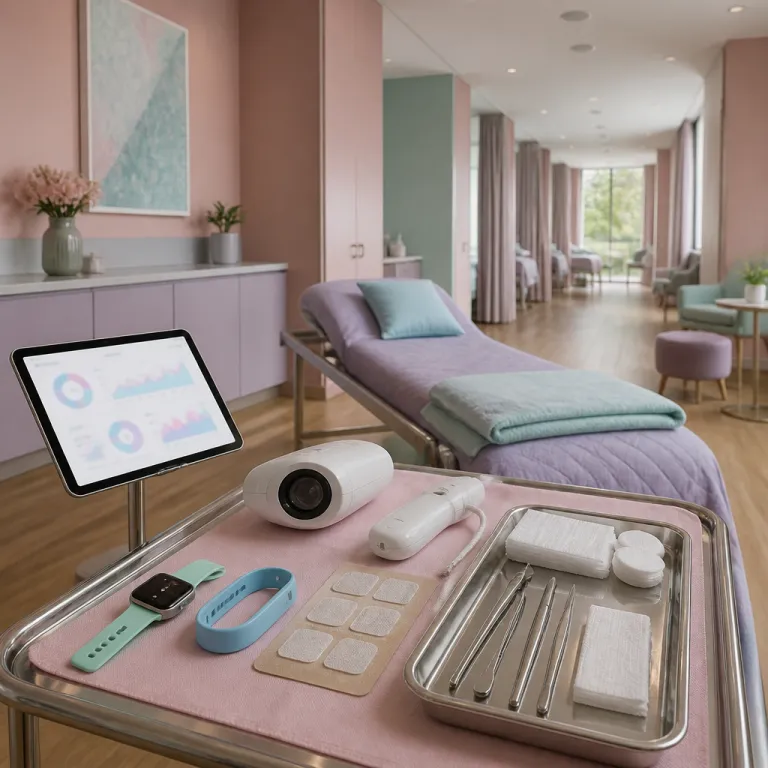
From intake form to biometric profile: how wearable data reshapes the medical spa guest journey
Luxury medical spa hotels are quietly replacing long intake forms with continuous biometric profiles. For a solo explorer planning a health-focused escape, this shift means your wellness story now starts weeks before check-in, as your wearable tech streams health data into secure clinical dashboards. The result is a guest experience that feels less like a generic spa break and more like a personalized health residency built around your body rather than a brochure.
On leading platforms, the idea of wearable data–driven medical spa personalization no longer describes a trend; it describes the operating system of the stay. Medical spa hotels partner with healthcare-grade brands and ingest data from Apple Health, Oura Ring, WHOOP, and Garmin to understand your sleep stages, resting heart rate, heart rate variability, and daily health and fitness patterns. These data-driven insights add clinical depth to the traditional spa questionnaire, giving physicians a comprehensive health baseline before you even pack a suitcase.
Behind the scenes, AI algorithms and predictive analytics translate raw health data into treatment pathways that target long-term health management rather than short-term pampering. If your real-time metrics show chronic stress, the design of your wellness programs will lean toward parasympathetic activation, breath work, and low-intensity fitness rather than high-intensity intervals. When medical spa teams work this way, guests feel that every element of the services mix, from nutrition to sleep coaching, has been personalized with measurable outcomes in mind.
Which wearables connect to medical spa hotels, and what data they actually use
For travelers used to closing their activity rings, the first practical question is simple: which devices will my chosen spa actually read? The most advanced medical spa hotels now integrate with WHOOP, Oura Ring, Apple Health, Fitbit, and occasionally Polar, creating a unified stream of health data that follows the guest across the property. This ecosystem allows spas to move from one-off snapshots to real-time monitoring that supports data-driven personalization throughout the stay.
Clinicians focus on a tight cluster of metrics that correlate strongly with health, wellness, and recovery. Heart rate variability, resting heart rate, sleep duration, sleep stages, and recovery scores form the backbone of data-driven assessment, while step counts and training load round out the picture of overall fitness and body stress. In properties where the wellness industry overlaps with serious healthcare, blood pressure, glucose from compatible sensors, and even respiratory rate may be layered in to build a more comprehensive health profile.
At SHA Wellness Clinic in Spain, for example, a partnership with WHOOP lets guests track biometric data under medical guidance and build individualized longevity strategies, turning wearable tech into a clinical tool rather than a lifestyle accessory, as described in SHA’s own program materials. Forward-thinking spas use similar integrations to pre-assign wellness programs, scheduling medical consultations, targeted spa therapies, and health management coaching before the guest arrives. If you want to understand how this feels in practice, read about what happens before the first treatment in a bloodwork-first medical spa stay on this detailed clinical intake guide.
From numbers to protocols: how biometric data shapes your treatment plan before arrival
Once your wearable data is shared, the real work begins in the back office, where medical spa équipes translate metrics into protocols. A low recovery score combined with poor deep sleep and elevated resting heart rate will often trigger a design shift toward nervous system repair rather than aggressive detox. In practice, that might mean fewer intense fitness sessions and more spa therapies that support holistic health, such as contrast hydrotherapy, guided breath work, and targeted myofascial release.
Clinicians use predictive analytics to segment guests into risk and opportunity profiles, then build personalized health strategies that aim for better outcomes over a long-term horizon. If your health data shows strong cardiovascular fitness but erratic sleep, the wellness programs may prioritize circadian rhythm, nutrition timing, and stress management instead of basic cardio. At properties inspired by the Blue Zones philosophy, lifestyle data informs everything from meal design to social programming, aligning the guest experience with evidence-based longevity principles rather than vague wellness promises.
Equinox Hotels demonstrate how this can extend beyond the spa, embedding sleep monitoring, circadian lighting, and temperature-regulated mattresses into every room to create a continuous feedback loop between guest and clinical team. For a solo traveler booking through a luxury platform, this level of biometric and wearable data personalization means your room, your schedule, and your services are all tuned to your current physiology. To plan this kind of refined escape with thrive-oriented medical spa stays, explore the curated itineraries on this planning guide for performance-focused retreats.
Privacy, consent, and control: what to ask before sharing your health data
Handing over continuous biometric data to a hotel is not a trivial decision, especially when that data touches on medical themes. Before you enable any integration, ask the spa to explain exactly which health data streams they access, how long they store them, and who inside the healthcare and wellness équipes can see your report. You should also clarify whether your data is used only for your guest experience or whether it feeds anonymized analytics that shape future services and brand partnerships.
Reputable spas treat wearable data as protected health information in spirit, even when regulations do not strictly require it. In the United States, for example, the Health Insurance Portability and Accountability Act (HIPAA) generally applies only when a covered healthcare provider or insurer is involved in delivering care or billing; a hotel-operated spa that simply reads your fitness data may fall outside HIPAA and instead be governed by consumer privacy and state laws. In the European Union, by contrast, the General Data Protection Regulation (GDPR) treats health-related data as a special category that requires explicit consent, clear purposes, and defined retention limits, whether the operator is a clinic or a wellness resort.
During pre-arrival calls, ask three direct questions that come straight from current guest FAQs: “How do medical spas use my wearable data?”, “Is my wearable data shared securely?”, and “Can I opt out of sharing my data?”. The most trustworthy answer set is simple and transparent: “They analyze your health metrics to tailor treatments.”, “Yes, reputable spas ensure data privacy and security.”, and “Yes, participation is typically voluntary.”. If a property cannot respond with this level of clarity, it is not yet ready for the kind of data-driven health management you should expect from a serious medical spa hotel.
Designing a stay around your metrics: how it feels as a solo medical spa traveler
Arriving at a medical spa hotel that already knows your sleep debt and training load feels very different from filling out a clipboard in the lobby. Instead of generic welcome rituals, you move straight into a consultation where a physician or senior wellness expert walks you through a visual report of your recent health and fitness patterns. This is where wearable data–enabled medical spa personalization becomes tangible, as the team explains how your heart rate variability, recovery scores, and stress markers have shaped the week ahead.
For a solo explorer, this level of personalization can be both reassuring and disorienting, because the schedule is no longer negotiable in the same casual way. If your body shows signs of overtraining, the spa may cancel high-intensity classes you had planned and add restorative services, even if you insist you feel fine. The aim is not to limit your freedom but to protect long-term outcomes, using data-driven insights to prevent you from turning a wellness retreat into another form of stress.
Across the property, subtle design choices reinforce this clinically informed guest experience, from meal timings that match your chronotype to quiet zones scheduled when your nervous system most needs calm. In family-friendly medical spa hotels, similar logic now extends to multi-generational stays, with tailored programs for parents and teens that respect different baselines and goals, as explored in this guide to clinical programmes that welcome families. When it works well, guests feel both cared for and respected, with personalization enhancing autonomy rather than eroding it.
Beyond the stay: building long term health management with your spa and your wearables
The most advanced medical spa hotels now see each stay as one chapter in a longer health management narrative rather than a one-off reset. After checkout, many properties encourage guests to keep sharing selected health data so clinicians can track outcomes, refine wellness programs, and schedule follow-up consultations at clinically meaningful intervals. This approach turns the guest relationship into a client lifetime partnership, where each visit builds on the last rather than starting from zero.
Clinics like Fountain Life and Pura Longevity already integrate AI systems to analyze multi-omic datasets and generate personalized risk scores, and medical spa hotels are beginning to plug into similar infrastructures, as reported in hospitality and health-tech trade coverage. When your wearable tech streams continuous metrics into these platforms, predictive analytics can flag early warning signs and suggest when to return for more intensive medical or spa-based interventions. Over time, this creates a feedback loop where better outcomes are not measured only in how guests feel during the week, but in objective shifts in comprehensive health markers across months and years.
For travelers, the practical question becomes how to choose properties that can genuinely support this kind of long-term, data-driven journey. Look for spas that speak fluently about health, wellness, holistic health, and healthcare integration, not just relaxation, and that can explain how they use real-time data to adjust services between visits. When wearable data–led medical spa personalization is handled with this level of rigor, the line between hotel, spa, and preventive clinic starts to blur in ways that genuinely serve your future self.
Key figures on wearable data and medical spa personalization
- Around 30% of spas worldwide currently use wearable data to inform treatments, according to the Global Wellness Institute’s 2023 “Wellness Policy Toolkit: Digital Wellness” report, which notes that early adopters still have a competitive edge in the wellness industry.
- Properties that integrate wearables typically track at least five core metrics, including heart rate variability, resting heart rate, sleep duration, sleep stages, and recovery scores, creating a more comprehensive health baseline than traditional questionnaires alone.
- Medical spa hotels that use data-driven personalization often report higher repeat visit rates, as guests feel their programs evolve with their health data rather than repeating the same template each stay, according to case studies highlighted in hospitality trade publications.
- Partnerships between medical spa hotels and health tech brands such as WHOOP, Oura, and Apple Health have expanded rapidly in recent years, mirroring the increased consumer adoption of wearable tech for everyday health management.
FAQ about wearable data and medical spa hotels
How do medical spas use my wearable data ?
They analyze your health metrics to tailor treatments, using indicators like sleep quality, heart rate variability, and recovery scores to design spa services, fitness sessions, and medical consultations that match your current physiological needs.
Is my wearable data shared securely ?
Yes, reputable spas ensure data privacy and security by using encrypted connections, strict access controls, and clear retention policies, and you should always ask the property to explain these safeguards before connecting any device.
Can I opt out of sharing my data ?
Yes, participation is typically voluntary, and you can choose a more traditional intake process based on questionnaires and in-person assessments if you prefer not to connect your wearable tech.
What if I use multiple wearables at the same time ?
Many advanced medical spa hotels can ingest data from several platforms through Apple Health or similar hubs, but clinicians will usually prioritize the most reliable streams to avoid conflicting signals when designing your program.
Will sharing my data change my insurance or medical records ?
In most cases, data shared with a medical spa hotel stays within that hospitality and wellness context, but you should ask explicitly whether any information is added to formal healthcare records or shared with third-party insurers before consenting.
Sources
- Global Wellness Institute, “Wellness Policy Toolkit: Digital Wellness” (2023)
- HospitalityNet, coverage on wellness and wearable technology in hotels
- Hotel Online, reports on medical spa hotels and health tech partnerships